
India’s development is marked by a persistent paradox: The hope that promises progress and reduces vulnerability often becomes a source of destruction. Across the country, infrastructure projects such as roads, dams, tunnels, and industries are seen as both economic endeavors and moral imperatives. These symbols of national pride and modernity were intended to reduce insecurity and transform lives. In the context of development, hope often signifies aspirations for prosperity, security, and modernization. However, these same hopes can become agents of instability, ecological trauma, and social risk.This paradox is particularly evident in areas where fragile ecosystems coexist with vulnerable communities. In such places, the drive for development has created a cycle in which the symbols of progress become the sources of destruction. This is recently evident in the states of Himachal Pradesh, Jammu and Kashmir, Uttarakhand, and Punjab, which exemplify India’s development paradox.
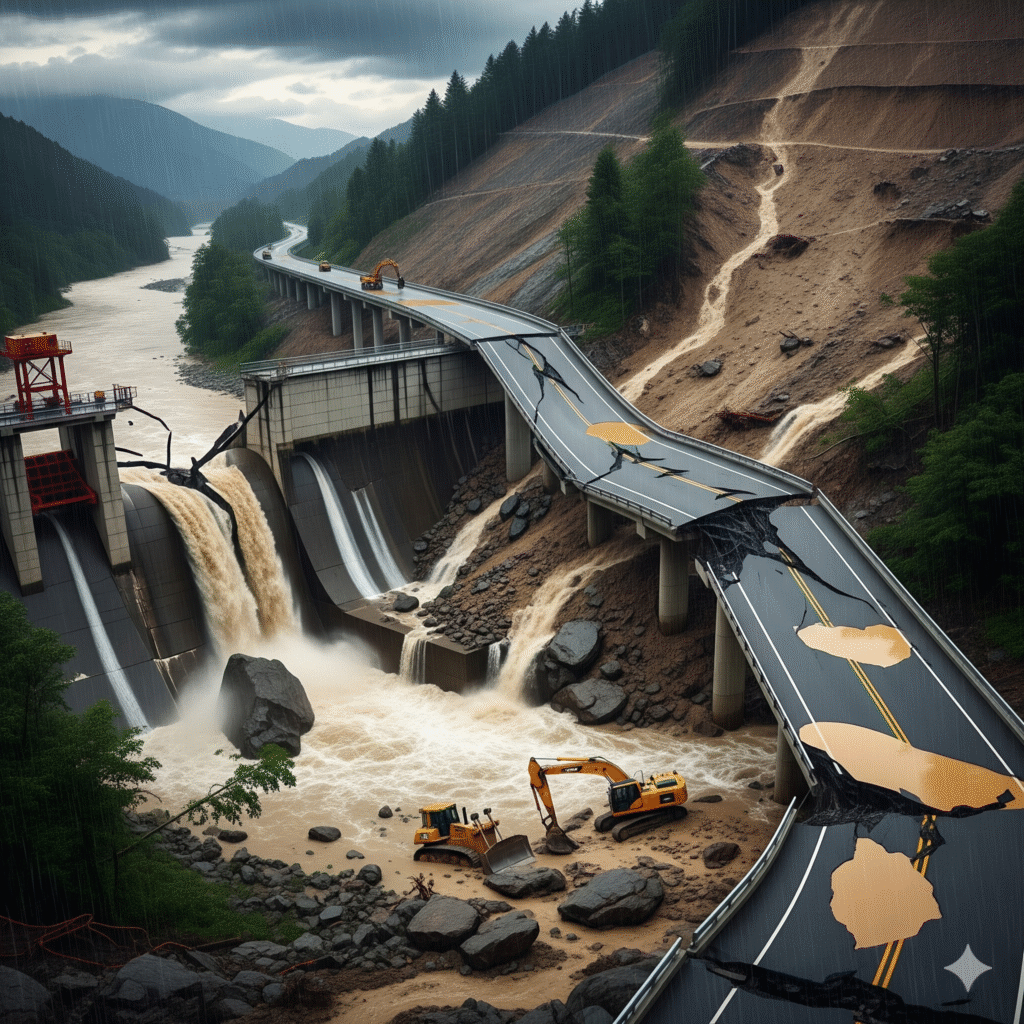
In the Himalayan states, large-scale infrastructure projects such as highways, tunnels, and dams are often justified in the name of connectivity and development. However, the relentless carving of mountains, deforestation, and unregulated construction have destabilised previously resilient landscapes. What were once symbols of natural endurance are now fragile zones, prone to landslides, floods, and slope failure. These disasters are not merely natural; they are deeply human-made. Towns in Himachal Pradesh have been submerged, while parts of Jammu and Uttarakhand have seen catastrophic flooding and landslides. Construction on unstable slopes, encroachment on floodplains, and disregard for ecological limits have turned the promise of development into a pathway toward destruction.
Punjab, while geographically distinct, presents a parallel story. The Green Revolution of the 1960s instilled hope through agricultural modernisation. With high-yield crops, mechanised farming, and extensive irrigation canals. Punjab was transformed into India’s food bowl. For decades, farmers in Punjab represented the vision of a self-sufficient nation. However, this model has led to deep ecological distress. Aquifers have been depleted due to excessive groundwater extraction, and the overuse of fertilisers and pesticides has degraded the soil. Each year, this state has experienced devastating floods, particularly in the monsoons, as the recent floods in Punjab have resulted in crop losses, livestock deaths, and the displacement of people. These floods are not merely acts of nature; they stem from upstream deforestation, poor canal management, and rampant encroachment on floodplains. The dream of prosperity has faded, leaving despair and uncertainty for thousands of farming families.
Sociologically, the paradox of hope in contemporary India is not accidental. Hope is mediated by the state and market forces. Development is portrayed as a national necessity, but the language of hope often hides the risks and inequalities of such initiatives. Those most affected hill dwellers, small farmers, migrant labourers rarely have a voice in development policies, yet bear the costs. This creates an ‘inequality of hope’: for tourists, highways offer comfort, but for villagers, they bring landslide threats. For urban families, riverside colonies always offer insecurity and increase flood risk. Thus, hope is not equally shared; it is stratified by class, caste, and geography.
This paradox is exemplified in the context of a recent disaster. In Himachal Pradesh, Punjab, and Jammu, recent flooding has destroyed homes, schools, and agricultural fields. Families have lost savings, been displaced, and life has become uncertain. This is not simply a natural act; it is a structural part of India’s development approach. The cycle of development creates hope; hope generates risk; risk leads to disaster; and disaster recreates hope remains largely intact. To disrupt this cycle requires a precise understanding of what hope means in the context of development. Hope should not be equated with endless construction, industrial expansion and production. Instead, hope must be rooted in ecological balance, social justice, and enduring security. Development must move beyond infrastructure-centric goals and begin prioritising people, especially marginalised people. Mountain communities, small-scale farmers, and informal workers must be central to the development process, not peripheral to it. Democratising hope means every person has the right to imagine and define the future. It means re-orienting from a top-down vision of development led by elites and toward a collective, inclusive, and sustainable approach. This is the only way India can transform development from the source of destruction towards a genuine pathway to securing a better future.
