
In contemporary India, masculinity is not a fixed identity; it is more of a performance that transforms based on context. The interaction between rural and urban masculinities in cities represents one of the most striking and troubling changes of recent decades. Economic growth, infrastructure development, digital media, and modern education have reduced the gap between rural and urban society, bringing men from very different cultural backgrounds into close contact. However, the values, norms, and expressions of masculinity they carry often clash, creating a volatile mix that is reshaping urban life.
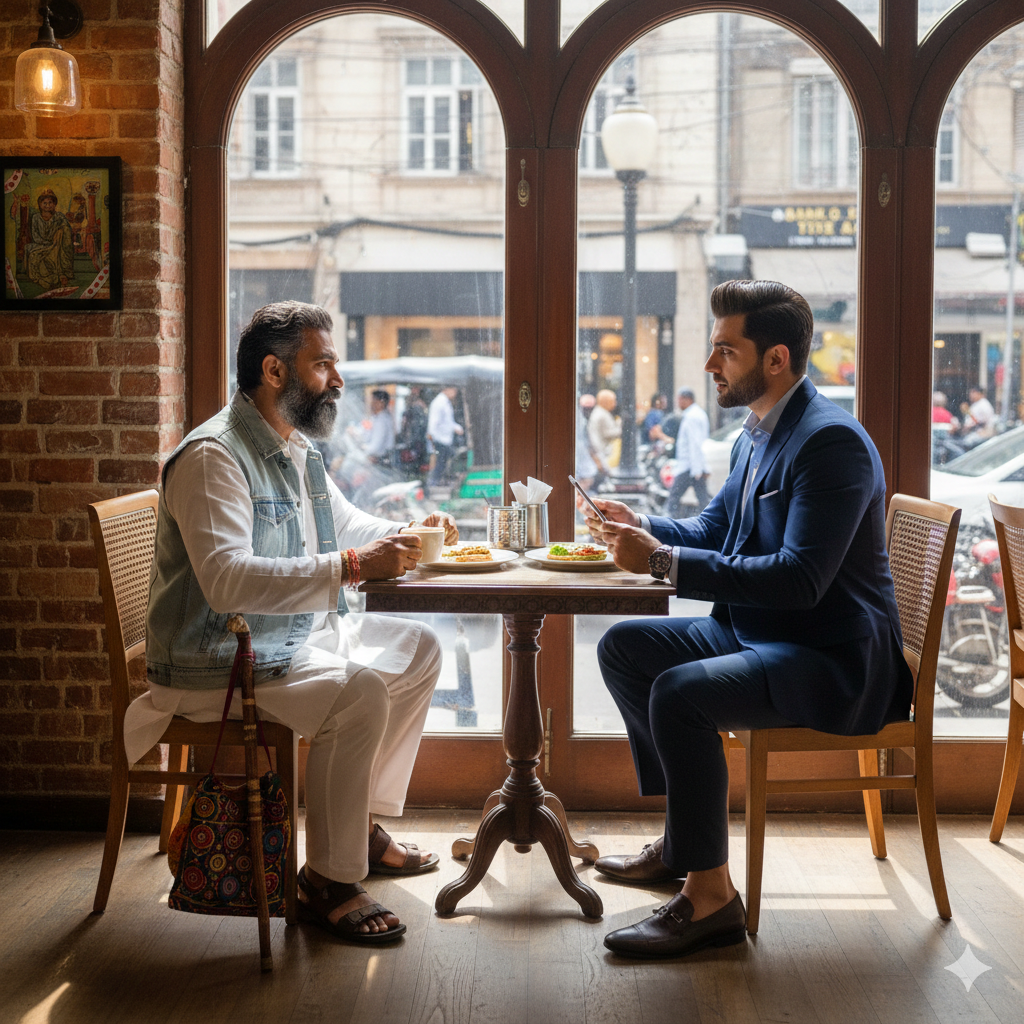
Urban masculinity closely relies on visibility. It manifests through the ability to perform dominance, fearlessness, and a willingness to bend or break rules in a way that attracts public attention. Publicly defying authority is not merely incidental; it plays a significant role in many urban subcultures. Actions such as rash driving, street fights, showcasing the body on streets, and finding loopholes in the normative pattern are performative acts intended to gain attention, spark discussions, and, in some circles, earn admiration. In these contexts, breaking the rules is always manifest as a sign of strength and independence.
When rural men introduce their deeply held view of masculinity into urban spaces, contradictions can arise. In rural areas, authority and moral obligation are closely intertwined, and public displays of strength or confrontation are seen as ways to maintain social order. However, in urban spaces, similar actions may be perceived as disruptive or deviant, especially when they involve physical forces or public disputes. What a rural man might view as defending is interpreted as aggression or rule-breaking
This interaction often results in the emergence of a hybrid form of masculinity. Rural men who move to urban centres often feel the need to act as protectors or moral enforcers. However, urban contexts tend to favour visibility and spectacle. The outcome is a combination of rural moral obligations with urban performative behaviour, leading to actions that are both assertive and attention-seeking. This blend does not solely emphasise moral responsibility or display; instead, it focuses on showcasing moral dominance in a space that values public defiance.
The effects of these behaviours are manifested in daily urban routine life: Road rage, disagreements at the market, bullying at work, and fights at shopping places. These situations often do not resolve conflicts but instead serve as demonstrations of a refusal to back down. In rural contexts, such actions might restore balance or reaffirm social order; however, in urban spaces, they often manifest as personal ego battles. Furthermore, these activities can create perpetual cycles of conflict in the public life of an individual.
Hybrid masculinities pose considerable challenges. For society, they can normalise deviant behaviour, jeopardise public safety, and undermine institutional authority. For individuals, behaviours that were respected in their rural communities can now leave them stigmatised or facing criminal charges or forfeiting legitimate livelihoods within the urban spaces. A man who was once perceived as a protector may be treated as a troublemaker, or even a possible threat to society.
The risk arises partly from the reduced availability of traditional checks on authority. In many local systems, it was common for elders, caste councils, in-group informal mediation, or a person’s family and neighbours to help resolve disputes. However, in urban spaces, rural support systems often do not exist, and the formal police may not be able to assist. As a result, there is a power vacuum where masculinities act outside the oversight of rural customs and authority, and are not even fully integrated under urban laws and culture either.
Thus, masculinity cannot be disentangled from the moral framework that surrounds it. In rural contexts, masculinity is related to service, protection, and communal honour, while in urban contexts, masculinity is related to visibility, transgression, and self-assertion. Men moving between these spaces find themselves in a context where neither frame is squarely applicable, leading to uncertainty and instability.
Dealing with this issue properly requires more than just punishment. Arrests and punishments might bring the problem to awareness, but they do not address the cultural reasons underlying the behaviour. Cities need to create socially valued and legally acceptable ways for rural men to exhibit strength, leadership, and responsibility. Civic engagement, through volunteer disaster response teams, organised sports, community safety patrols, or local leadership, can offer means of masculine expression that build rather than disrupt social order.
Simultaneously, urban culture is grappling with its proclivity for celebrating performative deviance. Popular media often celebrates the “rule-breaking hero,” perpetuating a cycle in which deviance becomes one of the primary yardsticks of masculine worth. To do this, we need to promote admiration for men who act prosocially or for others rather than for self-serving reasons. This requires both cultural and institutional changes.
The intersection of rural and urban India is not only about frameworks or commodities, but it also represents an intersection of systems of meaning and identity. The motif of masculinity might be the most intense point of such an intersection. If cities do not actively reframe the meaning of masculine recognition, hybrid masculinities will be at risk of adopting the most destructive tendencies of both traditions, and complementing the rural impulse to act with an urban impulse to be seen. In such a world, defiance will be at the heart of masculine identity, with negative ramifications for civic life and institutions, and the men involved.
The challenge is not to disconnect men from masculinity, but to channel their masculine expression into forms that promote auxiliary social structures rather than undermining them. This needs to happen in conjunction with recognising the cultural stems of behaviour, a willingness to create new norms, and providing open, valued positions for men, so that connecting personal honour with the public good is visible. Without these ways forward, the interface between rural and urban masculinities will remain a site of contestation rather than a productive point of connection.
